 CHIYANG
Case Study: 60,000 m² of Protected Vegetable Growing Where Summer Heat Stops Everything Else
Project Overview
Xinjiang, in China's far northwest, is a land of extremes: summer heat that scorches, brutal UV, and a day-night temperature swing of 15–20 °C. In most of this region, open-field vegetables simply stop growing at the height of summer. Yet on this 60,000 m² site, lettuce and leafy greens grow right through the hottest months — under a multi-span film greenhouse complex engineered by Chiyang specifically for hot, arid climates.
Completed in 2025, the complex is one of our flagship references for growers in hot and dry regions: the exact conditions found across Central Asia, the Middle East and North Africa.
The Challenge
Growing vegetables commercially in Xinjiang means fighting every heat-related factor at once:
Scorching summer heat — inside an ordinary greenhouse, midday temperatures exceed 45 °C and leafy crops bolt or die
Intense UV at high altitude — standard film degrades and yellows within a season or two
Violent day-night temperature swings — crops stressed by a 20 °C swing grow unevenly and yield poorly
Dry, sand-laden air — cooling systems must work with scarce water, and structures must shrug off abrasive wind
Long, cloudless summers — too much light is itself a stress factor that burns young plants
Our Solution
Chiyang engineered the complex around Xinjiang's climate data, not a catalog template:
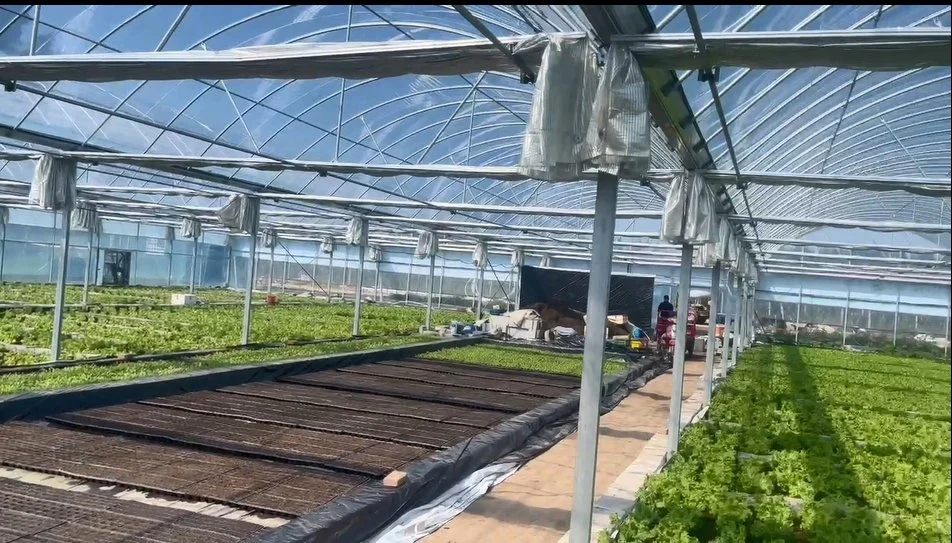
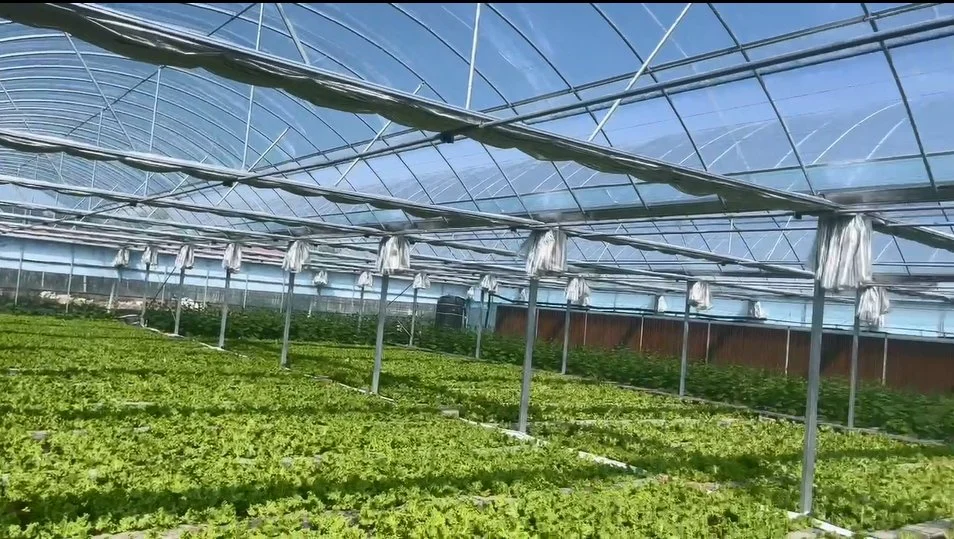
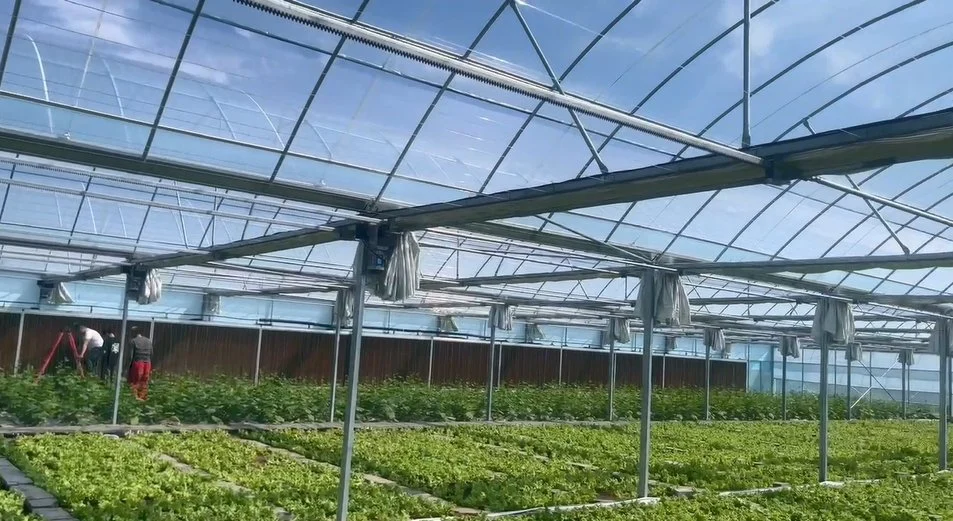
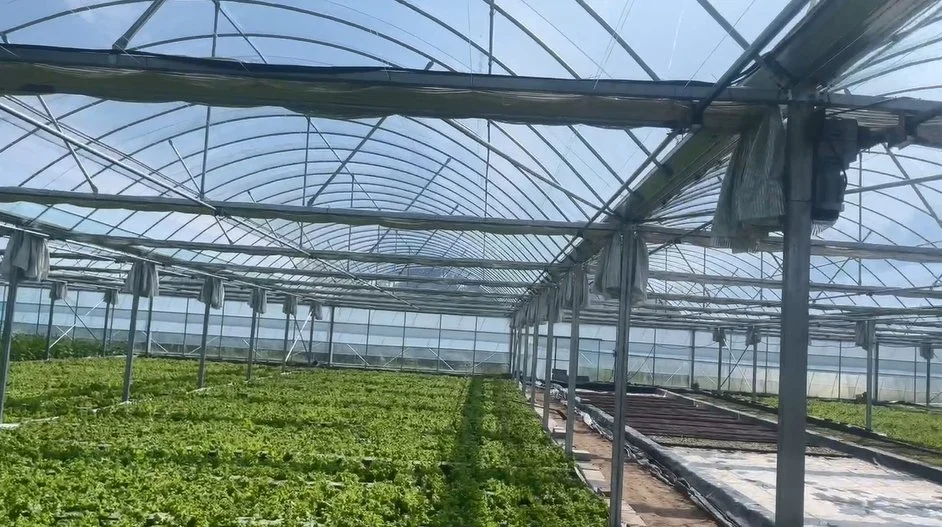
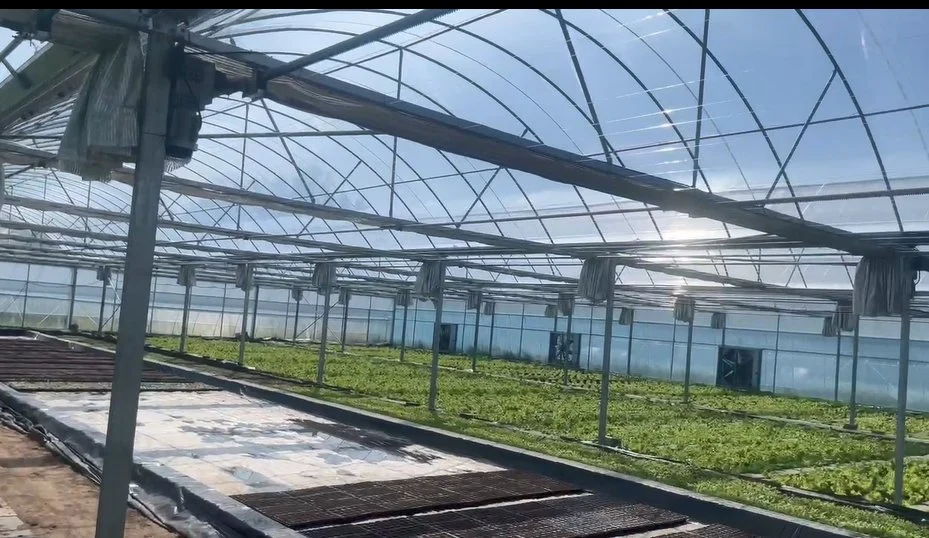
Multi-span film greenhouse complex — galvanized steel frames with bracing and anchoring designed against local wind loads, gutter-connected for large, efficient production bays
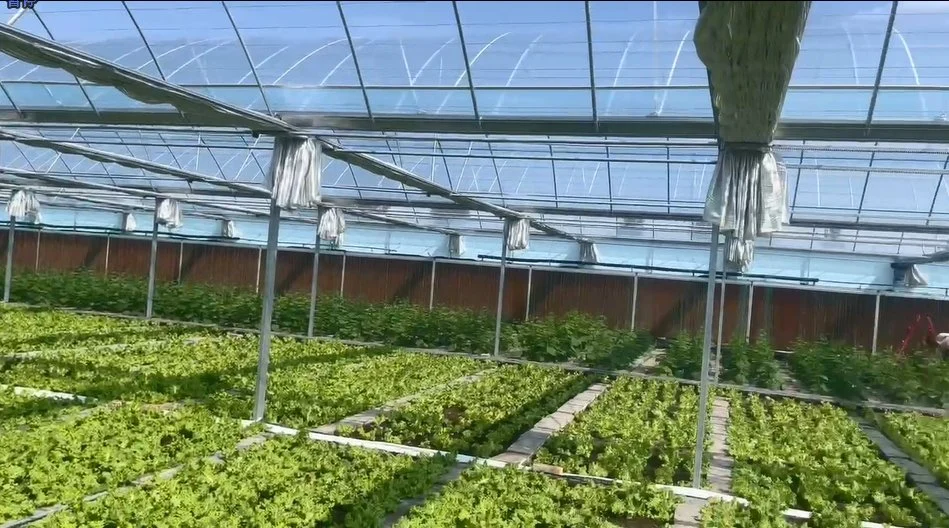
Internal shading screen system — retractable thermal-aluminum screens under the roof cut peak light and temperature inside the house; on clear days they block excess radiation while still letting diffuse light reach the crop
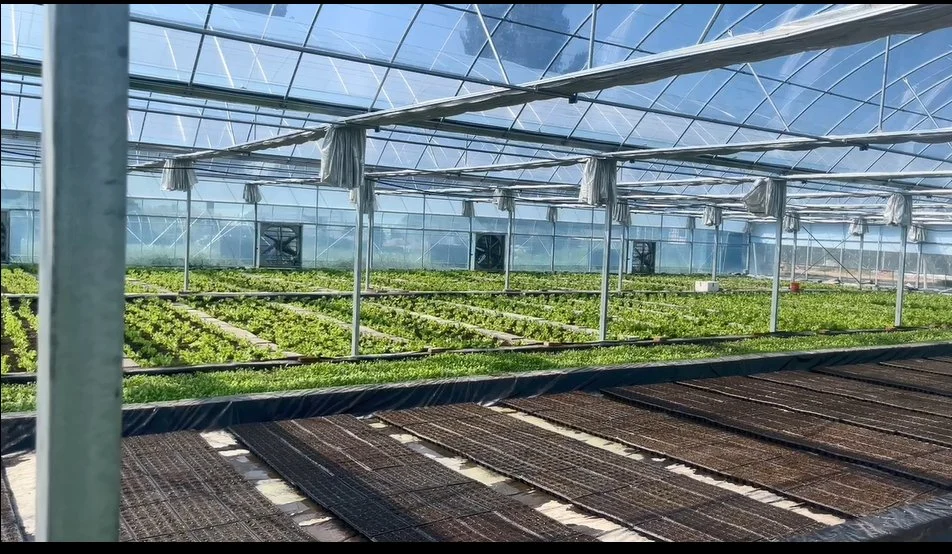
Fan-and-pad evaporative cooling — exhaust fans pull air through wet-cell pads on the opposite wall, dropping incoming air by 10–15 °C even when it is 40 °C outside — the proven cooling method for hot, dry regions
High-UV-stability PO film — anti-UV package rated for Xinjiang's brutal sunlight, keeping light transmission high for years
Combined roof + side ventilation — natural heat purge before the fans even switch on, cutting electricity costs
Raised growing beds and seedling propagation lines — clean, efficient production from nursery trays to harvest beds, as shown across the full 60,000 m² complex
Project Data
| Item | Details |
| Location | Xinjiang, Northwest China |
| Structure | Gutter-connected multi-span film greenhouses |
| Total area | 60,000 m² |
| Completion | 2025 |
| Cooling | Internal shading screens + fan-and-pad evaporative cooling |
| Application | Commercial vegetable production (lettuce, leafy greens, seedling propagation) |
The Result
Through the hottest summers, the complex keeps a stable growing environment: internal temperature held well below outdoor peaks, light controlled by the shading screens, and cooling running efficiently despite the desert climate. The base now produces steady harvests of fresh vegetables in a region where open-field growing is hostage to the weather — and stands as proof that Chiyang structures and climate systems perform where the heat is hardest.
What This Means for You
If your growing region battles heat, UV, dust or drought — across Central Asia, the Middle East, North Africa and beyond — this 60,000 m² project shows exactly what climate-matched engineering achieves. We design against your weather data, then stand behind the structure for its whole life.
Send us your location and crops — we reply within 24 hours with a climate-matched design and factory-direct quotation.